

In June 2023, the International Telecommunication Union’s Radiocommunication Sector reviewed and adopted the “Recommendation on the Framework and Overall Objectives for IMT toward 2030 and Beyond.” During its development, this recommendation incorporated suggestions and perspectives from government agencies, regulatory bodies, operators, equipment manufacturers, research institutions, and other organizations in Europe, Asia, North America, South America, Africa, and Oceania, bringing together the global vision and consensus on 6G. At the same time, ITU/3GPP has preliminarily mapped out a standardization path for 6G, with plans to establish 6G KPIs by 2026 and formally launch the 6G standardization process. The race toward 6G has officially begun, and the next five years will be a critical period for the research, development, and standardization of 6G mobile communication network technologies. As the pace of communication technology innovation accelerates, every generation of communication transformation faces technical hurdles; only by overcoming these hurdles can one lead the transformation of communication technology.
Against the backdrop of rapid advancements in mobile communication technology, the Lüneburg lens has attracted significant attention within the telecommunications industry. The term “Lüneburg” honors Rudolf Karl Lüneburg, the American mathematician who pioneered the theoretical foundation of this technology. The Lüneburg lens model allows electromagnetic waves incident from space to converge at the focal point of the spherical lens; by placing a feed at this focal point and connecting it, a base station can receive and radiate signals in multiple directions.
A key prerequisite for realizing the Lüneburg lens model is that the dielectric constant of the material filling the sphere must vary gradually from the inside out; to date, no such material has been found in nature. Since its proposal in 1944, the Lüneburg lens has existed for nearly a century solely as a mathematical theory. In the decades that followed, many countries around the world conducted research on the Lüneburg lens using methods such as 3D printing and multi-material filling, with countries such as the United States, Japan, France, and Australia conducting extensive exploration into the application of the Lombard lens technology in fields such as military, phased array, and satellite systems. However, due to technical and material limitations, the Lombard lens has never been able to achieve large-scale mass production or widespread application.
In 2019, Foshan Yuehaixin Communications Co., Ltd. successfully developed synthetic electromagnetic metamaterials and production processes for Lombard lens technology, securing more than 200 authorized core invention patents. This truly transformed the Lombard lens from theory into reality; the Lombard lens sphere produced using this technology is the first product in China capable of mass production.
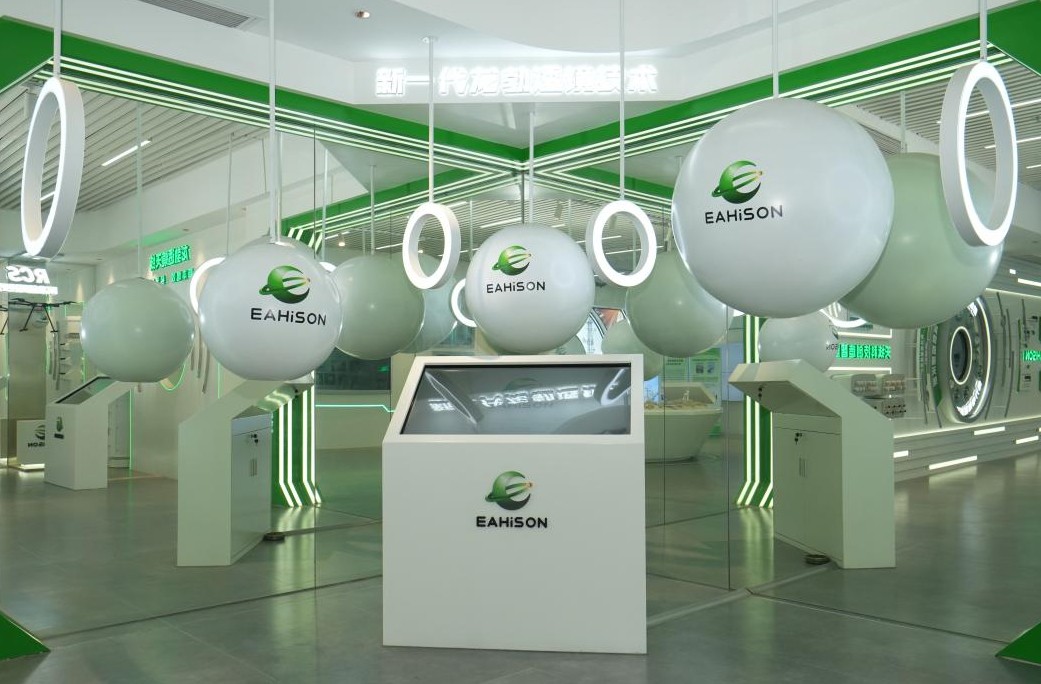
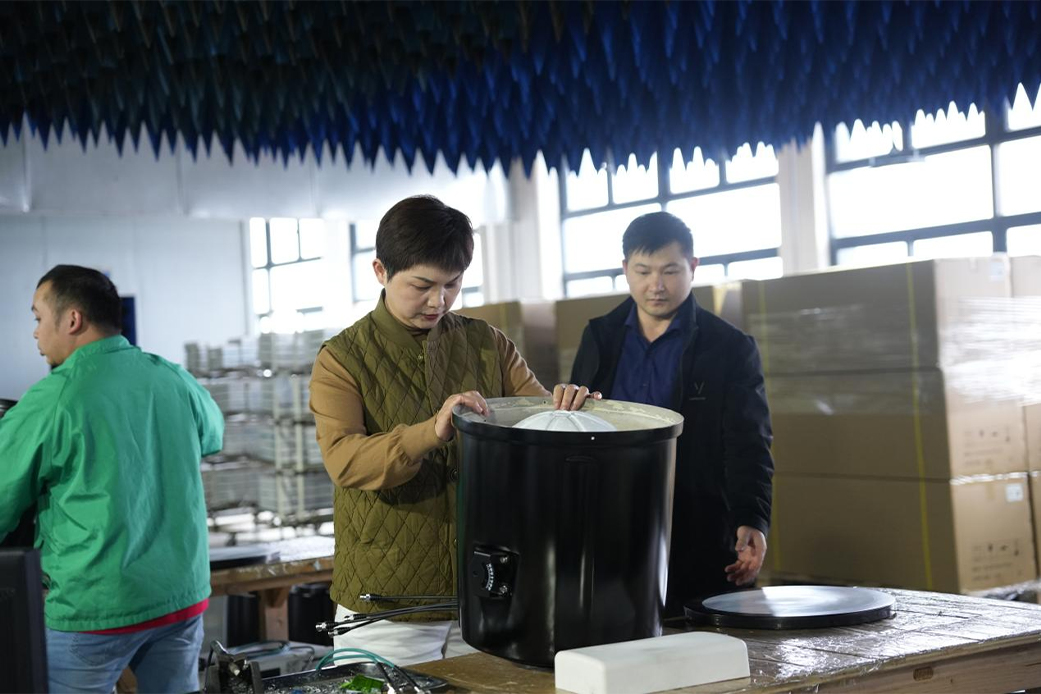
“The main technical challenges of the Long-Beau lens lie in the gradient rate of the sphere and the stability of the dielectric constant. Our team has researched the theory of solid electrolytes for low-dielectric-constant, low-loss electromagnetic metamaterials. We have also conducted in-depth studies on the properties of various types of semiconductor materials, continuously optimized material compositions and structures, and analyzed the correlation between material composition and dielectric constant as well as magnetic permeability. By applying equivalent medium theory to integrate crystal lattice structures with electromagnetic field excitation responses, After nearly 10,000 simulations and experiments, we have finally mastered the technology to control the direction and energy level of electromagnetic waves using synthesized electromagnetic metamaterials.”
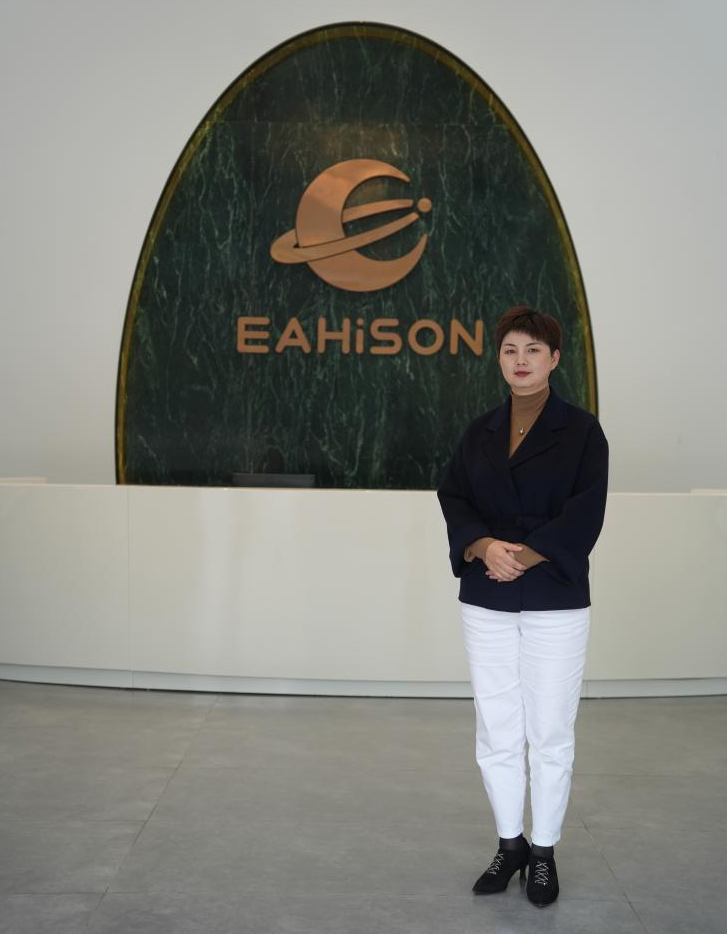
According to Li Jing, founder and chairman of Foshan Yuehaixin Communications Co., Ltd., “In the past, Long-Beauy lenses produced using 3D printing technology had a transmittance of 50%, low radiation efficiency, a low yield rate, and extremely high production costs, making them unsuitable for large-scale applications. The synthetic electromagnetic metamaterials developed by her team are characterized by low weight (<35 kg/m³), low dielectric loss (<1‰), and high dielectric constant precision (±0.03). The Lobbe lenses fabricated from these materials achieve a wave transmission rate of over 95%, with significantly improved radiation efficiency. “The synthetic electromagnetic metamaterial Lombard lens fills a domestic gap, ranks among the world’s leading technologies, and can promote high-quality, rapid development across various fields of civilian communications and national defense construction, holding significant strategic importance.”
In the field of civilian communications, the Lomb lens antenna features a wide bandwidth, excellent polarization characteristics, high gain, high radiation efficiency, and a wide vertical beamwidth. Compared to conventional panel antennas, a lens antenna with the same gain offers a vertical beamwidth that is more than 2.5 times wider, increases effective coverage distance by 50%, and facilitates deep, strong-signal coverage within the depth of a base station’s coverage area. The single-beam Lomb lens antenna developed by Yuehaixin features high directivity and concentrated beam energy, making it suitable for in-depth coverage in long, narrow areas such as bridges, expressways, high-speed rail lines, and tunnels; Multi-beam Lomb lens antennas feature high port isolation, minimal inter-beam interference, steep edge roll-off, and low horizontal side lobes, making them suitable for high-traffic scenarios such as sports stadiums, high-speed rail stations, airport terminals, public squares, college dormitories, and densely populated residential areas; Combined wide-beam Lomb lens antennas enable multi-cell networking for base stations, making them suitable for covering vast areas such as border regions, forests, islands, and offshore waters. The wireless private network for the Mudanjiang-Jiaodong High-Speed Railway, jointly built by China Mobile and China Unicom, utilizes Yuehaixin’s Lomb-sphere lens antennas. Compared to traditional 5G antennas, these Lomb-sphere lens antennas increase the coverage distance per station by more than 30%, reducing the number of sites required—which would have been 195 using conventional panel antenna solutions—and saving 92 million yuan in investment and maintenance costs over a 10-year period; In the wireless communication network built by China Unicom Shandong in the Bohai Bay waters, the Longbo spherical lens antenna optimized coverage, achieving a maximum range of 75 km and effectively improving download speeds within the coverage area. This effectively addresses the communication needs of offshore wind power, deep-sea aquaculture, and fishermen, contributing to the development of a digital and smart ocean. In accordance with the requirements set forth in the “Notice from the Ministry of Industry and Information Technology and 10 Other Departments on Launching the ‘Signal Upgrade’ Special Campaign” and the “Notice from the Ministry of Industry and Information Technology and 13 Other Departments on Accelerating the Construction of ‘Broadband Frontier’,” Longbo lens antennas provide operators with comprehensive network construction solutions that reduce costs and improve efficiency. These solutions accelerate the advancement of deep mobile network coverage, enhance network quality, optimize user experience, continuously meet the people’s growing needs for a better life, support the digital transformation of key industries, and promote high-quality economic and social development.
In the field of national defense applications, based on breakthroughs in synthetic electromagnetic metamaterial technology, the company has already conducted product R&D and transitioned to mass production in relevant areas, such as RCS radar reflectors for stealth fighter jets, target drones and missiles for live-fire exercises, decoys to mislead enemy forces, and radar-stealth enclosures, among others.
Lombard lens technology spans multiple disciplines—including electromagnetics, materials science, chemical engineering, physics, and mechanical processing methods—and is highly interdisciplinary, placing significant demands on technical talent. By continuously and systematically addressing various technical bottlenecks, Yuehaixin has gradually formed an interdisciplinary R&D team. Talent is the primary resource for technological innovation. On the path of independent innovation, Yuehaixin has always prioritized talent. The company has established R&D partnerships with multiple universities, including Xi’an University of Electronic Science and Technology, Beijing Institute of Technology, and Sun Yat-sen University, and has set up a postdoctoral innovation practice base. This has formed an industry-academia-research chain, accelerating the refinement of the industrial chain.
Regarding market demand and capacity for lobular lens antennas, Li Jing explained that the annual demand for existing antennas in the global operator market is approximately 100 billion RMB. Given the requirements of network deployment scenarios and the technical characteristics of lens antennas, the market potential for lens antennas is estimated to reach 10 billion RMB. “However, we observe that Longbo lens antennas have not yet reached the stage of large-scale, low-cost manufacturing. Market iteration requires time, and the industrial chain is not yet mature. This is an area where we need to focus our efforts both now and in the foreseeable future. To open up the market, this technology can only expand into more application scenarios, play a greater role, and better serve people’s livelihoods through practical use. The purpose of all technology is to serve people’s lives; it only gains value when introduced into the market, and it is only through market application that technology can be continuously refined and improved.”
Yuehaixin has consistently adhered to the business philosophy of “Making technological innovation a choice for a better life.” The company continues to increase its investment in technological innovation, fully leverage its role as a key driver of corporate technological innovation, respond to national strategies and industrial development needs, play a role in achieving breakthroughs in key core technologies and major original technologies, and proactively fulfill its social responsibilities.